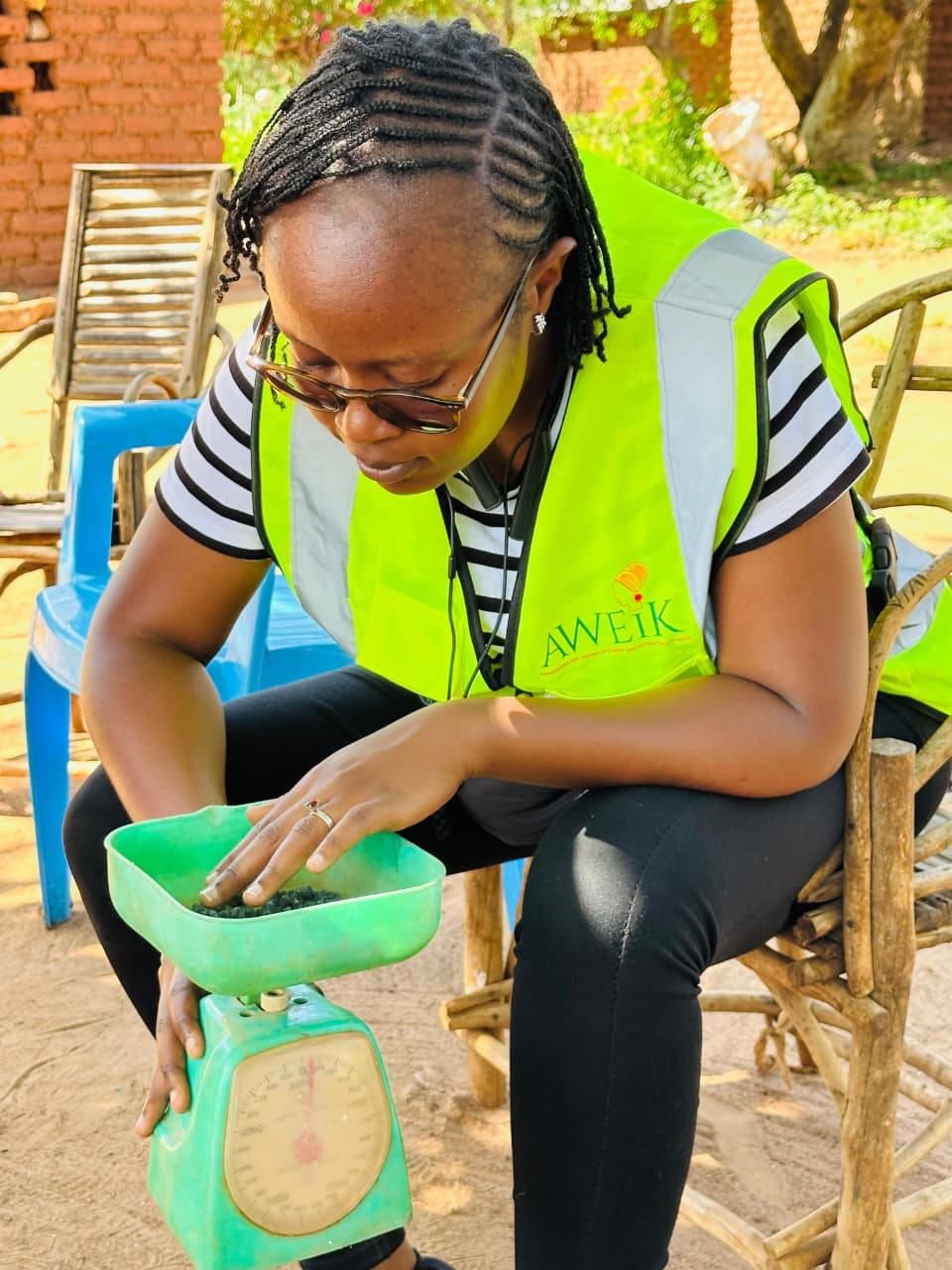
A few weeks ago, I was part of the AWEIK team that took part in a technical scoping exercise alongside the Pact — Moyo Gems team, across Mwingi North, Kitui East, and Kitui South to evaluate the status of the Artisanal and Small-scale Gemstone Mining in Kitui County, identify the existing gaps, and develop ways to build the capacity of the miners.
Kitui’s geological wealth is undeniable. Beneath its soil lies an impressive diversity of gemstones - corundum (sapphires and rubies), garnets, amethyst, and iolite, each carrying significant market value and global demand. On paper, this should translate into thriving local economies and improved livelihoods for miners.
But, in reality, it hasn’t, so far.
What stood out most during the fieldwork was that geological wealth does not translate to viable economic returns when the knowledge and precision tools are absent.
Where Value is Lost
At a Sapphire mine in Kitui South, we encountered a challenge that defines the plight of many artisanal gemstone miners. This miner is a veteran who has mined since 1994.
Decades of experience. Deep knowledge of the land. A life literally built around mining.
Yet in August 2025, he was forced to halt operations due to financial constraints.
But what was more saddening, is that for the years he was in operation, he relied on a standard kitchen scale to weigh his stones. In most contexts, that might seem harmless, but in the world of gemstones, precision is money!! Therefore, a food scale with a 40g minimum detection threshold is typically blind to the realities of the gemstone market where every gram matters!
Let’s consider a simple example to understand this huge technical gap:
A miner gets a high-quality 5g rough Sapphire with a local market rate of KES 20,000 per gram.
This single stone fetches a totalvalue of KES 100,000 (approx. $770).
The sad reality: Because the scale cannot register anything below 40g, it effectively treats a 5g stone as having zero weight.
Zero weight equals Zero value - at least in the eyes of the equipment.
The Exploitation Gap
When a stone cannot be measured, it becomes easy to undervalue it.
Middlemen step in, often labeling such stones as “samples” and offering a fraction of their worth. A gemstone valued at KES 100,000 can be bought for as little as KES 2,000.
That’s a 98% loss, not due to market fluctuations, not due to poor quality, but due to lack of appropriate tools.
This is not an isolated case. It is a pattern.
Across many artisanal mining communities, the absence of basic measurement tools creates an invisible but powerful disadvantage. It strips miners of bargaining power and entrenches cycles of low income despite high-value minerals.
Beyond Extraction: The Case for Empowerment
The lesson here is clear: experience alone is not enough.
Thirty years in mining cannot compensate for the absence of the right tools and knowledge. If the sector is to deliver real economic value, interventions must go beyond extraction and focus on empowerment.
Two areas stand out as critical:
- Technical Knowledge and Gemology Skills
Miners need the ability to differentiate between non-gem, near-gem, and gem-grade stones. This includes understanding color saturation, clarity, and internal inclusions; key factors that determine market value. With this knowledge, miners are better positioned to negotiate, price, and protect the value of their findings.
2. Access to Appropriate Tools
Simple tools can make a profound difference. Digital scales capable of measuring small weights accurately, and gemstone torches for inspecting internal characteristics, are not luxuries, they are necessities. They bridge the gap between discovery and fair valuation.
A Call to Rethink Impact
The case of this miner challenges us to rethink what meaningful support in the mining sector looks like.
It is not enough to celebrate resource abundance or invest solely in extraction processes. Real impact lies in ensuring that value flows back to the people at the very start of the supply chain.
Precision, in this context, is not just a technical detail, it is a pathway to equity.
As stakeholders in the mining sector, our responsibility is to close these gaps. By investing in training, tools, and knowledge systems, we can transform artisanal mining from a survival activity into a sustainable and dignified livelihood.
Because ultimately, the true price of precision is not measured in grams, it is measured in the economic impact being felt directly in the miners’ pockets.
This article has been published on AWEIK’s website to reach wider audiences in our mining community.