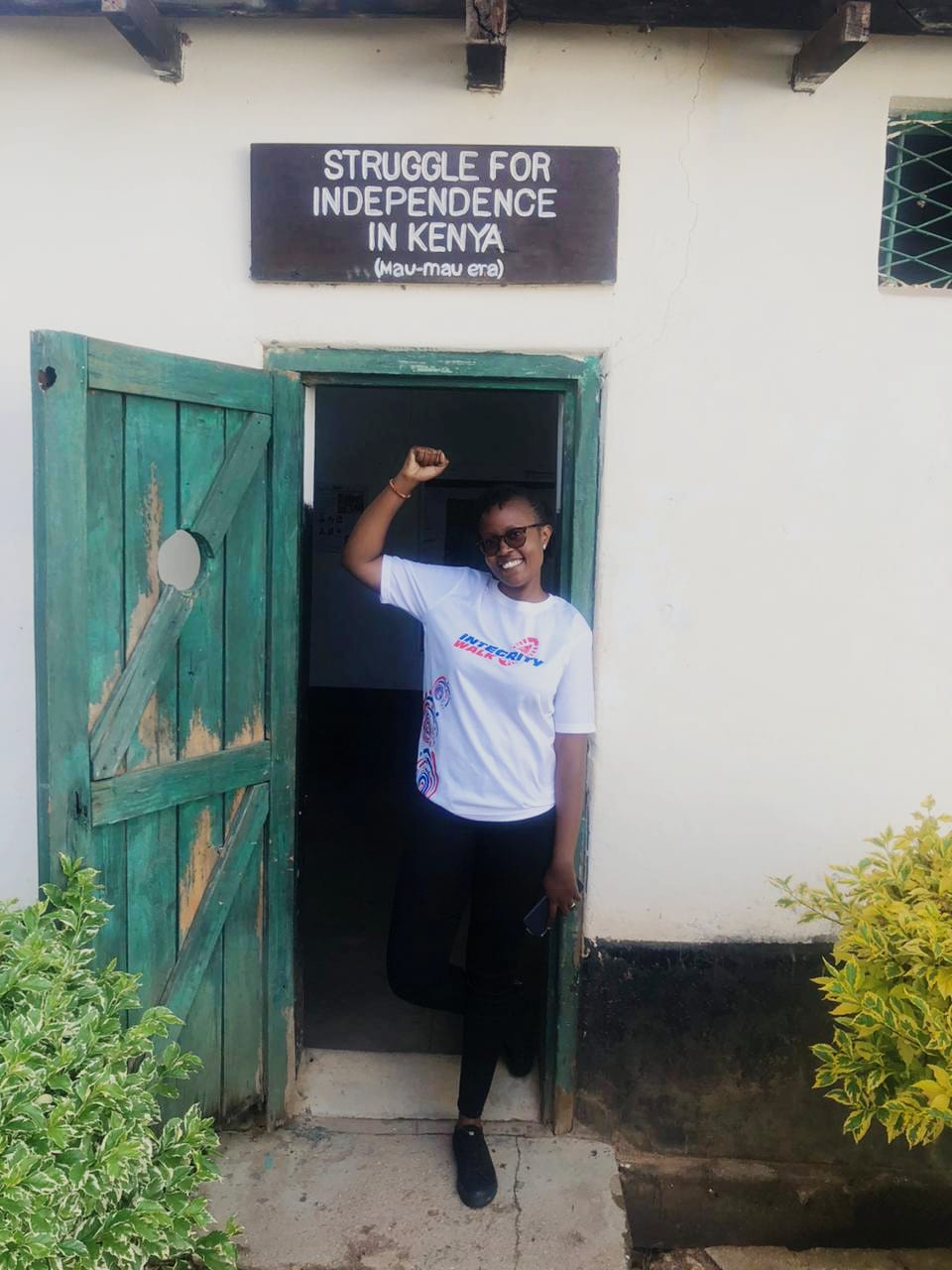
If you ask most Kenyans about their dream vacation getaway, the answer is almost mechanical: “The Coast.” Whether it’s the white sands of Diani or the ancient beautiful island of Lamu, or the quiet warm town of Malindi, the ocean has always been our default setting for paradise. And look, I get it; I lived in Diani. I know exactly how it feels when the beautiful sun sets on your skin at the beach and how dinner right at the beachfront is so romantic and cool! As a matter of fact, moving to Nairobi felt like a brutal breakup with the beach that I wasn’t quite ready for.
However, there is a secret no one has probably told you: there is a different kind of magic found in the dry, golden heat of places like Magadi, Turkana, West Pokot, Samburu, Isiolo, Laikipia and even Marsabit. And I am not bias because Isiolo is my home. It is simply what it is! This past weekend, I went looking for this magic in West Pokot, specifically Kapenguria; alandscape made of ethereal sunsets, vast clear blue skies and beautiful rolling hills.
My journey began at the Kapenguria Museum. Walking through those halls where the Kapenguria Six were detained, not only triggered a wave of primary and high school history lessons nostalgia but also made everything feel so real. In our Social Studies and History books, the Kapenguria Six; Jomo Kenyatta, Bildad Kaggia, Kung’u Karumba, Fred Kubai, Paul Ngei, and Achieng’ Oneko, were heroic figures frozen on a page.
I knew them as revolutionists who were untouchable and almost felt like beings out of this world. However, standing in the very cells where they were detained, and reading about their lives, I started to see the complicated, messy, and deeply “normal” reality of their lives. These weren’t just names in a syllabus; they were men with human hearts, predictable tempers, and very human behaviors.
The most jarring realization was how meticulously this part of their “humanity” has been omitted from the books and their messes were rarely mentioned. Standing before the records of Jomo Kenyatta’s life, I met a man whose life was defined by far more than his authoritative voice, a fly-whisk and a podium. I saw a man who had navigated the world, made terrible mistakes, and suffered the same quiet griefs we all do:
The English Chapter: I was stunned to learn of his second marriage to Edna Clarke and the birth of their son, Peter Magana, in 1943. It’s a side of the Founding Father’s story that is rarely discussed in our local curriculum. I doubt you even knew Peter Magana before this🤭
The Forgotten Grief: The story of Grace Wanjiku, his third wife, who died in the tragedy of childbirth in 1950.
The Familiar Legacy: His final marriage to Mama Ngina in 1951, shortly before the storm of the State of Emergency broke.
Reading these facts didn’t diminish his status as the Founding Father of the Nation; it made his journey feel real, reminding me that history isn’t made by statues, but by people who carry their own burdens while trying to carry the weight of a nation.
But while Kenyatta was the one mostly known amongst the six, it was Bildad Kaggia who truly stayed with me. In a continent and country where the term “politician” is often synonymous with “clinging to power until death,” Kaggia was an outlier. He didn’t view the struggle for independence as a ladder to wealth; instead, he resigned early from the world of politics to live the quiet, private life of a small-scale farmer and businessman. In fact, he wasn’t pleased with the fact that Kenyatta and his family amassed wealth during his tenure. In a world of selfish politicians, Kaggia’s legacy is a sobering reminder that for some, the liberation struggle was driven by pure principle, not the promise of a lifelong pension.
Still at the museum, beyond the politics lies the vibrant, intricate culture of the Pokot people. I was particularly drawn to the Sengwer community, a small but resilient group. Their craftsmanship was stunning, right from the heavy, symbolic jewelry of the women and the ingenious construction of their homes. Seeing their traditional beds, grinding rocks, leather plates, and cooking/beer pots offered a glimpse into a lifestyle that is both minimalist and deeply rooted in the earth.
However, in the middle of the beauty, I was confronted with the glaring reality of a culture that prized Female Genital Mutilation (FGM). Seeing those cold, physical implements was a stark reminder of how culture is a double-edged sword, and pain is woven into some traditions. I cherished the beautiful beadwork and their history while still firmly condemning the practices that caused so much pain to women and girls, even as the struggle to end them entirely continues.
I left West Pokot feeling like I’d finally read the “uncensored” version of Kenya’s history. It was a trip that didn’t just fill my camera roll, but filled the historical information gaps that I didn’t know existed.